Granite Factory Machinery in India — Setup Guide, Suppliers & Buying Links

Introduction
Granite remains one of the most popular natural stones used for flooring, countertops, monuments, and building façades in India. A well-equipped granite processing unit — with the right machinery — can transform rough quarried blocks into polished slabs, tiles, countertops, and bespoke stone work. This blog post provides:
A detailed overview of the essential machines used in a granite factory
Why each machine is needed
Real Indian suppliers and purchase links — to help you source equipment
Whether you are planning to start a small workshop near Bengaluru (or elsewhere in India), or scale up to a medium/large-size plant — this guide will help you plan, buy, and get the right setup.
About Prostone — 20 Years of Doing Exactly What We’re Teaching You Today
Everything outlined in this guide is not theory — it’s exactly the same journey Prostone started over 20 years ago. We began as a small granite-processing workshop with a single block cutter and a manual polishing setup. Over the years, we refined our machinery choices, optimized plant layouts, built supplier networks, and scaled operations step by step.
Today, after completing 2000+ successful projects across India and overseas, Prostone is here to help new and growing granite businesses avoid costly mistakes, choose the right machines, and set up production lines that actually work in real-world conditions.
Whether you are planning a small workshop, a medium-scale slab unit, or a full industrial plant, we can guide you with:
Machinery selection based on your production goals
Supplier verification & sourcing assistance
Factory layout planning
Costing, budgeting & ROI projections
On-ground insights built over two decades in the stone industry
If Prostone grew from a small shed to a high-capacity stone-processing unit, you can too — with the right roadmap and the right partners.We’re here to help you set up, scale, and succeed.
Section 1: Key Machinery for Granite Processing & Why They Matter
Block Cutting Machines (Block Saws / Multi-blade Cutters)
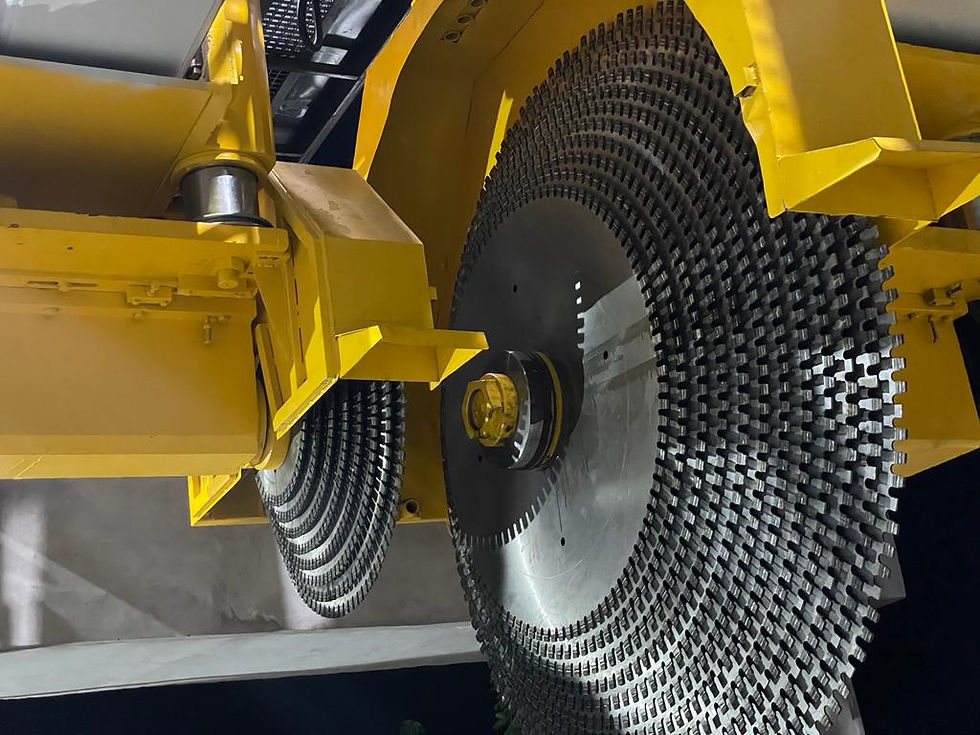
These are the first machines in any granite factory — used to slice large quarry blocks into manageable slabs. Without them, raw granite blocks are impossible to process into slabs or tiles. Multi-blade cutters help increase output by cutting multiple slabs at once.
Use case: mandatory for converting raw blocks into slabs suitable for further cutting or finishing.
Bridge Saws / Cutting Machines
After slabs are produced, a bridge saw (or similar cutting machine) is used for precise cuts — to size slabs for tiles, countertops, stair-steps or custom requirements. Bridge saws ensure straight, accurate cuts.
Use case: finishing the basic slab to size for flooring, tiles, countertops or cladding.

Polishing Machines & Polishing Lines
Granite slabs post-cut are rough and dull — polishing machines bring out the natural shine, enhance the stone’s aesthetics, make it smooth, and increase commercial value. For a factory serving customers who expect finished, ready-to-install slabs / countertops, polishing is essential.
Use case: finishing product for sale — polished slabs, countertops, tiles.

Edge Cutting / Edge Polishing Machines
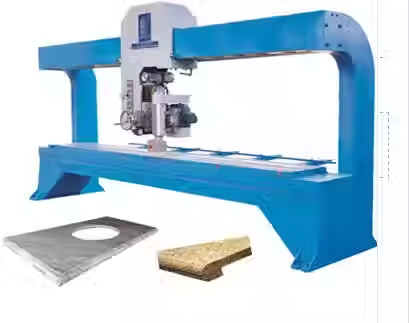
For items like countertops, steps, window sills — slabs need their edges shaped and polished (e.g. beveled, bullnose, chamfered). Edge polishers and cutting machines give smooth, safe, and decorative edges.
Use case: countertops, tiles, steps, or custom decorative stone work.
Auxiliary & Supporting Equipment: Cranes / Material Handling, Water / Dust Management Systems
Granite blocks/slabs are heavy. Cranes, gantry cranes or slab-lifters are needed to move slabs safely between cutting, polishing, storage. Also, granite cutting/polishing uses a lot of water (coolant) and produces dust/slurry — so water-recycling systems and dust/slurry disposal or extraction systems are essential, especially to comply with environmental/safety norms.
Use case: safe handling of heavy slabs; sustainable operations; compliance; worker safety.

Section 2: Typical Setup & Budget — Small / Medium / Large Plant Models
Here is a rough idea of what a small, medium, or large granite-processing unit involves, in terms of machinery and approximate investment.
Scale of Plant | Typical Machinery Setup | Approximate Investment (machinery + basic setup) |
Small Workshop (custom tiles, small volume) | Basic block-cutter or manual saw; small slab/edge polisher or manual tools; basic drill/grinder; minimal finishing & handling infrastructure. | ~ ₹3–5 lakhs (plus space, utilities, labor) — small-scale, minimal investment setup. (KVIC Online) |
Medium-Scale Unit (regular slab/tile production, steady output) | Proper block-cutter or circular saw; polishing machine/line; edge polisher; accessory tools; handling & basic waste/water management; modest infrastructure. | ₹50–80 lakhs (machinery + basic infrastructure + utilities + working capital) — capable of stable production. (Scribd) |
Large / Industrial Scale Factory (high volume, full-scale operations) | Multi-blade or gang-saw block cutters; multiple saws, polishing lines; edge/finish machines; cranes/gantries; water recycling & dust/slurry management; storage, handling, inspection, large shed & heavy-power setup. | ₹1.2–2.5 crore or more depending on automation level, capacity, and infrastructure. (Scribd) |
🛑 Note: These are rough estimates — actual costs depend on machine brand, capacity, customizations, shipping/installation, local electricity/water, and labour costs.
Section 3: Where to Buy — Real Suppliers & Links (India)
Here are reputed Indian suppliers where you can source granite-processing machinery. You can contact them, request quotes, and compare based on capacity & support.
Supplier / Manufacturer | What They Supply / Remarks | Price Indication / Notes |
Bhavika Machine Tools Pvt. Ltd. (Ajmer, Rajasthan) | Block cutters (single-blade, multi-blade), stone polishing machines, bridge saws, gantry cranes. (Bhavika Machine Tools P Ltd.) | Multi-blade granite block cutter — ₹27–30 lakhs per piece. (Bhavika Machine Tools P Ltd.) |
Shri Bhagwati Machines Pvt. Ltd. (also in Rajasthan) | Multi-blade cutters / stone block cutters for high output, suitable for industrial-scale operations. (B2BMAP) | 10-blade stone block multi cutter — export listing at USD 50,000/piece (contact for INR quote). (B2BMAP) |
Online / B2B directories & portals — e.g. TradeIndia, Justdial, StoneContact | These list multiple suppliers across India with variety of machines — block cutters, polishing machines, edge cutters etc. Good for sourcing, comparing offers. (Justdial) | Example price ranges: Block cutter / granite cutter machines from ~₹1.5–3.0 lakhs (smaller/basic) to corporate-grade machinery costing much more. (Justdial) |
✔️ What to check when contacting suppliers
Machine capacity (block size it can cut, number of blades for multi-blade cutters)
Power & motor specifications (ensure suitable for your region’s electricity supply)
After-sales support, spare parts — critical for heavy wear-and-tear functions like cutting granite
Delivery, installation, and training (especially for multi-blade or automated machines)
Water and waste handling capabilities (if included or need separate setup)
Section 4: SEO & Business Case — Why Granite Factories are a Good Investment (India Context)
Demand in India: Granite is widely used in residential & commercial buildings — for flooring, kitchens, façades, monuments — making domestic demand strong.
Value addition: By processing the stone (cutting, polishing, finishing) yourself, you capture value instead of just selling raw blocks.
Profitability estimates: According to a sample project report, a cutting, moulding & polishing unit (medium scale) with setup cost around ₹60 lakhs – ₹1.4 crore can yield good return on investment over 1.5–2 years. Scribd+1
Scalability: You can begin small — with basic machines — and expand gradually as demand and capital allow. This flexibility makes it attractive for entrepreneurs, even with modest initial capital.
Market potential: With growth in housing, infrastructure and real estate — demand for finished granite slabs and tiles remains high.
Section 5: Final Thoughts & What to Do Next
Start by listing your planned production capacity (e.g. how many slabs/tiles per month) — this will determine the kind of machinery and plant size you need.
Contact a few suppliers (Bhavika, Shri Bhagwati, or via TradeIndia / StoneContact) — ask for full specifications, installation & after-sales support.
Plan for infrastructure requirements: 3-phase power, water supply & waste disposal, shed/plant space, storage, labour.
If starting small, begin with a basic block-cutter + basic polishing/finishing setup — then reinvest as demand grows.
Keep in mind consumables & maintenance costs — granite cutting/polishing consumes diamond blades, abrasives, water, power — these affect monthly operating cost.